
Introduction
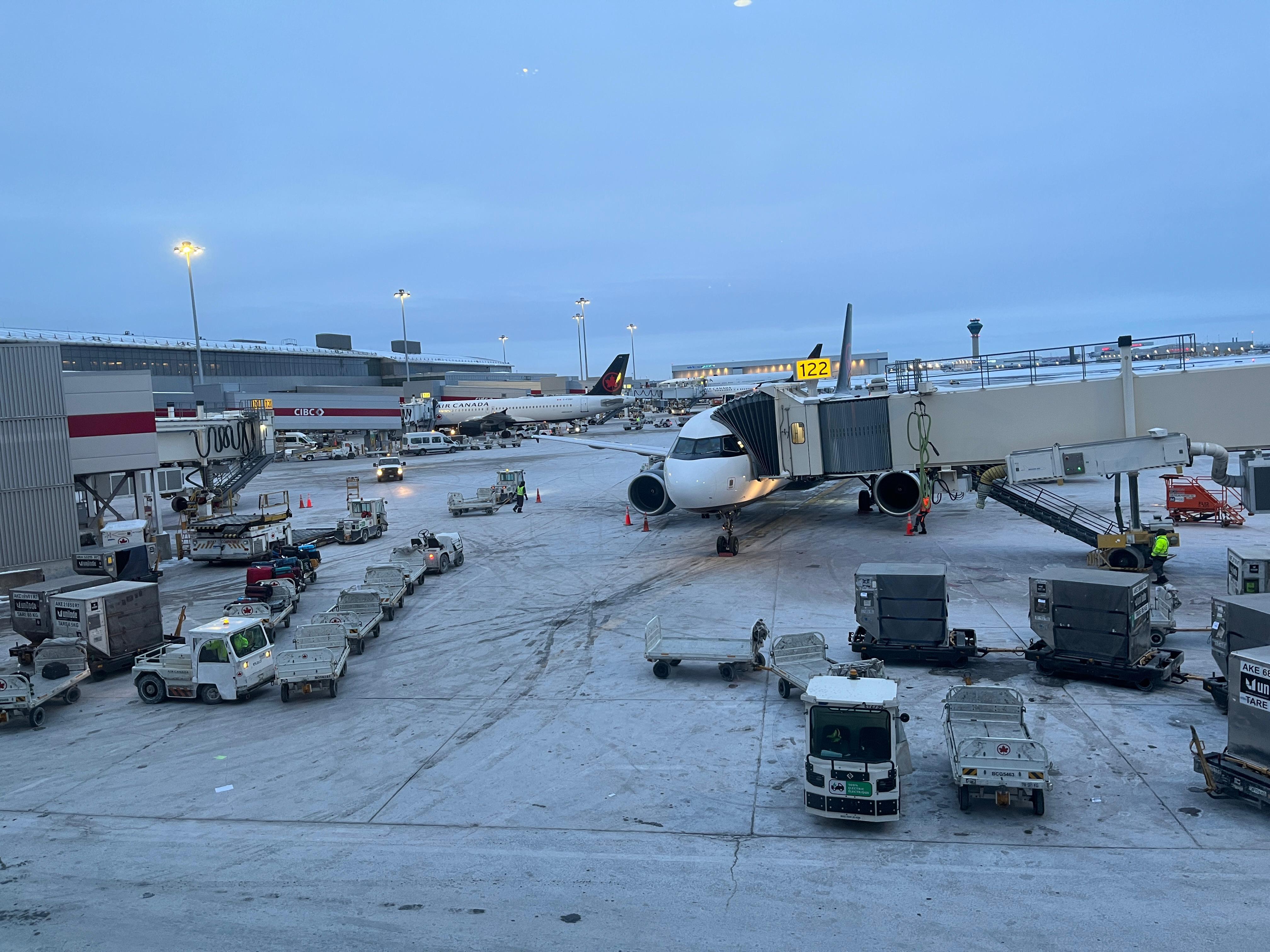
At a busy international airport at 6 AM, planes are arriving, cargo needs to move, and passengers are waiting for their bags at baggage claim. Ground crews need dollies to handle the workload, but locating available equipment on a 500-acre apron can be challenging. The dollies might be near Terminal C, at the cargo warehouse, or anywhere in between.
This scenario plays out daily at airports around the world, creating inefficiencies that add up to considerable costs.
How Airport Dollies Get Misplaced
Thousands of dollies operate at any major airport. Multiple ground handlers use equipment that looks similar, and different drivers move them throughout the day. Any tractor can hook up to any dolly, and occasionally this happens by mistake.
The airport apron presents particular challenges. ULDs and dollies get moved frequently, but safety regulations limit radio communication in these areas. While tracking a ULD during aircraft loading is simple, monitoring equipment on the apron or in warehouses becomes considerably more difficult.

The Financial Impact
The industry loses between $330 million and $400 million annually on ULD repairs and replacements. This figure doesn’t include flight delays, aircraft damage, or cancelled departures caused by equipment issues.
Currently, roughly 1 million ULDs move through global airports, valued at more than $1 billion. ULDs have become a leading cause of aircraft damage on the ground, adding another $100 million in annual costs.
What This Means for Daily Operations
When ground handlers can’t locate equipment in real time, several issues emerge:
- Staff spend time searching for dollies instead of handling cargo.
- Tractors make unnecessary trips when the wrong equipment gets dispatched.
- Airlines maintain larger fleets than necessary to ensure adequate availability.
- Flight turnarounds can be delayed. Service quality for airline clients can suffer.
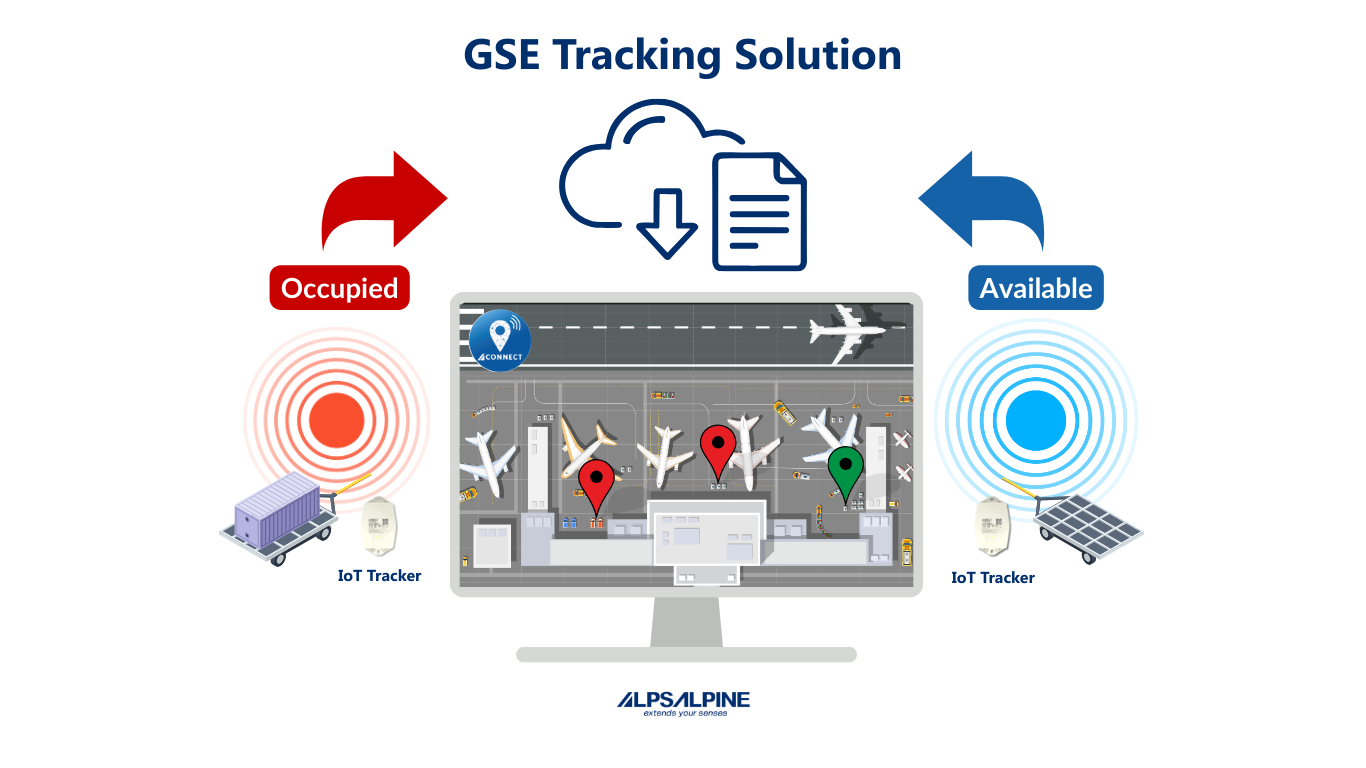
Ground handlers need solutions that show where equipment is located, whether it’s loaded or empty, and how much it’s being used—without demanding extensive infrastructure that demands constant maintenance.
The Limitations of Traditional Tracking Methods
The industry has used several approaches to track ground support equipment, each with inherent limitations.
Barcode scanning requires line-of-sight and manual operation. When a dolly is positioned behind others or moving across the apron, scanning becomes impractical.
Manual logbooks can quickly become outdated. Equipment locations change faster than paper records can capture, and manual entry introduces errors.
Different airports often use incompatible systems. Airlines operating across multiple hubs face integration obstacles that limit the effectiveness of location tracking.
Traditional RFID technology requires extensive reader infrastructure. The radio frequencies that work safely in airport environments typically have a range of only about 3 feet, making comprehensive coverage expensive to implement.
IoT Tracking: A More Capable Approach
Modern tracking solutions leverage different technologies to address these limitations. Bluetooth Low Energy, Wi-Fi positioning, GPS, and LTE connectivity support real-time visibility without extensive fixed infrastructure.
Airports across Asia-Pacific, Europe, and North America have implemented these tracking solutions to improve equipment management. Active tags and trackers on dolly fleets have demonstrated ROI through better utilization and reduced losses.
One major airline deployed over 1,400 Bluetooth readers across 200 airports to track its ULD fleet, showing that these systems can scale across large operations.
Benefits of Modern Tracking Systems
Current tracking solutions offer capabilities beyond simple location:
Fleet sizing can be optimized based on actual utilization data rather than estimates. Maintenance becomes more targeted—equipment needing attention is identified based on real usage patterns. Equipment can be positioned where it will be needed next, improving turnaround times. Purchasing decisions become more accurate. Equipment condition monitoring supports safety. Billing accuracy improves with documented usage and custody records.
For airports managing multiple ground handlers and airlines, these systems provide reliable operational data. For ULD leasing companies with assets across hundreds of locations, tracking enables them to maintain visibility into their equipment pool.
The Path Forward
Aviation operates on tight schedules where delays can compound. Effective tracking solutions help sustain operational schedules and enable faster response when issues occur.
With annual losses in the hundreds of millions and the growing adoption of tracking technologies at airports worldwide, introducing these solutions has become a practical consideration for ground operations.
The technology is available and has demonstrated results in practical-world deployments.
Need help finding the right GSE tracking solution?
We work with airlines, ground handlers, airports, and leasing companies to provide visibility over their assets. Contact us to discuss how tracking solutions can reduce losses, improve efficiency, and offer measurable ROI.
References
- International Air Transport Association (IATA). “Unit Load Devices (ULD).” Available at: https://www.iata.org/en/programs/cargo/cargo-operations/unit-load-devices/
- IATA. “ULD Regulations (ULDR).” Available at: https://www.iata.org/en/publications/manuals/uld-regulations/
- Air Cargo News. “IATA looks to cut ULDs’ $400m annual repair and damage costs.” December 18, 2024. Available at: https://www.aircargonews.net/airlines/iata/iata-looks-to-cut-ulds-400m-annual-repair-and-damage-costs/
- Air Cargo Week. “IATA’s 2026 ULD regulations bring major safety updates.” January 2026. Available at: https://aircargoweek.com/iatas-2026-uld-regulations-bring-major-safety-updates/
- Wikipedia. “Airport dolly.” October 27, 2025. Available at: https://en.wikipedia.org/wiki/Airport_dolly
- Aviation Pros. “Dolly, Container and ULD Tracking Solutions to Optimize Ground Handling.” Available at: https://www.aviationpros.com/ground-support-worldwide/gse/baggage-cargo/cargo-handling-equipment-accessories/uld-containers/article/53026915/
- Aviation Pros. “The Tech that Tracks ULDs.” Available at: https://www.aviationpros.com/gse/baggage-cargo/cargo-handling-equipment-accessories/uld-containers/article/21210627/the-tech-that-tracks-ulds
- RFID Journal. “Munich Airport Says RFID Improves Dolly Management.” April 7, 2020. Available at: https://www.rfidjournal.com/munich-airport-says-rfid-improves-dolly-management
- Xerafy. “Tracking Aircraft ULD with RFID For Visibility and Sustainability.” November 25, 2024. Available at: https://xerafy.com/case-study/uld-rfid-visibility-sustainability-air-freight/
- Aviation Business News. “Latest technologies in tracking ULDs for cargo equipment.” December 16, 2019. Available at: https://www.aviationbusinessnews.com/cargo/tracking-uld-cargo-equipment/
- 360iResearch. “Ground Handling Software Market Size, Share, Trend, Forecast, & Competit
Contact us!
Got questions? Book a demo and get the answers you need.
Discover how ALPS ALPINE asset trackers can support your operations, with no pressure or obligation to purchase.
Fill out the form below to connect with our team.