
How Warehouse Inventory Tracking Reduces Asset Loss in Manufacturing Operations
The Problem Nobody Talks About
Every manufacturing facility has them. Metal stillages stacked at the back of a supplier's yard. Roll cages sitting idle at a customer site three weeks after delivery. Pallets that left the warehouse and never came back.
These are returnable assets, and losing them is expensive. The typical level of returnable industrial packages lost annually across the industry is, on average10%, with individual pieces of equipment costing up to several thousand pounds each. For a facility running thousands of these assets at any one time, that is not a rounding error. For a manufacturer with 10,000 returnable transport items in circulation, losses easily reach $100,000 or more annually.
And that is before accounting for what happens when the assets you need are not where they should be.
What Happens When Equipment Goes Missing
A stillage or roll cage going missing is not just a replacement cost problem. It is a production problem.
When returnable assets are not returned on time or cannot be located, manufacturers often face shortages at the worst possible moment. A production line waiting on a missing rack of sequenced components cannot simply switch to a different container. According to the Siemens True Cost of Downtime 2024 report, unplanned downtime costs the world's 500 largest companies approximately $1.4 trillion annually, and while not all of that is caused by missing equipment, asset shortages are a well-documented contributor to the kinds of disruptions that stop lines and delay shipments.
The typical response to chronic shortages is to buy more. More pallets, more stillages, more containers, to buffer against the ones that go missing. This inflates capital expenditure, ties up warehouse space, and rarely fixes the underlying problem.
When assets go missing, teams often buy more rather than search longer. It is an understandable response, but it is also a cycle with no end point unless the root cause, poor visibility, is addressed directly.
Why Traditional Methods Fall Short
Most manufacturers rely on some combination of manual logs, barcode scanning, and periodic stock counts to manage returnable assets. Each has the same fundamental weakness: they only work when someone is actively checking.
A barcode scan tells you where an asset was at the moment of scanning. It does not tell you where it went next, how long it has been sitting at a customer site, or whether it crossed a boundary it was not supposed to cross. Manual records go out of date as soon as the asset moves. And periodic stock counts, by definition, only reveal losses after they have already happened.
RTIs travel through multiple warehouses, production plants, carriers, and customer locations. Manual logs cannot keep pace with this movement. By the time a shortage is identified, the asset could be anywhere across the supply chain.
What Warehouse Inventory Tracking Actually Does
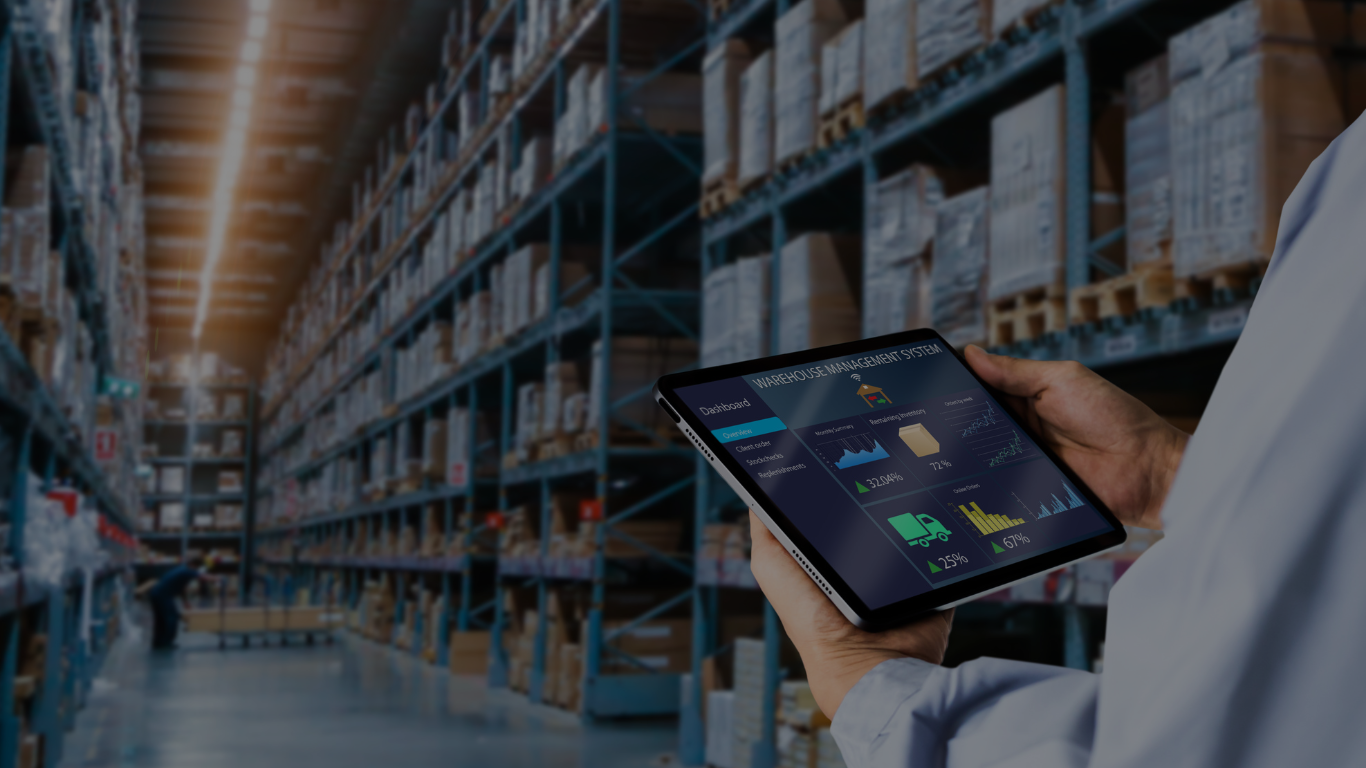
Near-real-time warehouse inventory tracking replaces the guesswork with a live picture of where every asset is, at any point in time.
Modern industrial asset trackers attach directly to stillages, roll cages, pallets, and other returnable equipment. They use low-power wireless communication to report location data at regular intervals, without needing to be plugged in, scanned, or manually logged. The result is a warehouse tracking system that tells you not just what assets you have, but exactly where they are, how long they have been there, and whether any of them have left a zone they were not supposed to leave.
For a warehouse operations manager, that changes the daily reality considerably. Instead of discovering a shortage when the production line calls, you see it developing in your dashboard while there is still time to act. Instead of writing off a missing stillage as a replacement cost, you know exactly which customer site it is sitting at and can arrange collection.
The Assets This Covers
Warehouse inventory tracking is most valuable for assets that move frequently, have meaningful replacement costs, and are easy to misplace in a busy operational environment. In manufacturing and industrial settings, that typically includes:
- Stillages and metal storage frames, which are commonly used in automotive and engineering supply chains to transport components between suppliers and assembly plants.
- Roll cages and distribution cages, used in retail and logistics operations for moving goods between warehouses and delivery points.
- Pallets and reusable packaging, which circulate across multiple sites and are among the most frequently lost assets in any supply chain.
- Intermediate bulk containers and totes, used in food, pharmaceutical, and chemical manufacturing where asset hygiene and location data both matter.
According to Market Growth Reports, cited by GPX Intelligence, by mid-2025 roughly 59% of global manufacturers had integrated IoT and RFID tracking into their returnable containers, cutting asset loss by 28% in automotive and pharmaceutical fleets. The shift toward tracking these assets is no longer an emerging trend. It is becoming standard practice.
How Alps Alpine Approaches This
Alps Alpine has been engineering precision electronics since 1948, supplying industries including automotive manufacturing where reliability standards leave no room for error. Since launching its asset tracking division in 2017, Alps Alpine Europe has deployed over 1.2 million trackers across Europe, one of the largest LPWAN asset tracker deployments on the continent, with installations at major global logistics operators including DHL.
Our industrial asset trackers are designed specifically for the kind of environments where returnable assets operate. They maintain accurate location data indoors and outdoors, across warehouse floors, factory sites, and multi-stop supply chains, without requiring fixed infrastructure at every location. Battery life is measured in years, not days, which means trackers stay on assets across full circulation cycles without maintenance intervention.
Beyond location, Alps Alpine trackers support shock monitoring, orientation detection, and temperature sensing, turning a physical asset tracker into a source of operational data that goes beyond simply knowing where something is.
For manufacturing operations managing large fleets of returnable assets across multiple sites, the platform offers a single, unified view of every tracked asset, updated in near-real-time.
What This Means for Operations Teams
The practical impact of warehouse inventory tracking in a manufacturing environment comes down to three things.
- Fewer lost assets. Near-real-time visibility makes it possible to identify missing assets before they are written off, and to hold supply chain partners accountable for assets in their custody.
- Lower capital expenditure. When you know where your assets are and how they are moving, you buy fewer replacements and carry smaller safety stocks. The assets you already own work harder.
- Less unplanned downtime. Shortages caused by missing returnable equipment are one of the more preventable contributors to production disruption. Visibility does not eliminate every risk, but it removes the ones that stem from simply not knowing where something is.
Ready to Improve Visibility Across Your Returnable Asset Fleet?
References
- TracLogik. "Keeping Track of Returnable Industrial Packaging." traclogik.co.uk. Available at: https://www.traclogik.co.uk/2020/11/23/tracking-your-returnable-containers/
- AirPinpoint. "Returnable Asset Management." airpinpoint.com. Available at: https://airpinpoint.com/asset-tracking/returnable-asset-management
- Market Growth Reports, cited in GPX Intelligence. "Returnable Container Tracking at Scale." gpx.co. April 2026. Available at: https://gpx.co/blog/infrastructure-free-asset-tracking-rtp/
- RFiD Discovery. "Tracking Returnable Transport Items." rfiddiscovery.com. Available at: https://www.rfiddiscovery.com/en-us/solutions/tracking-returnable-transport-items-rtis
- Siemens. "True Cost of Downtime 2024." Available at: https://www.siemens.com/true-cost-of-downtime
Contact us!
Got questions? Book a demo and get the answers you need.
Discover how ALPS ALPINE asset trackers can support your operations, with no pressure or obligation to purchase.
Fill out the form below to connect with our team.