
If you run a logistics operation or a manufacturing facility, this will be familiar. A trailer is due out at 6 a.m., and nobody can find it. A customer was supposed to return a roll container three weeks ago, but it has vanished. A pallet of tooling goes missing between shifts, and production slows to a crawl while someone searches the yard.
Preventing equipment loss is one of the biggest challenges operations teams face today. Still, most rely on the same approach: a spreadsheet, a clipboard, and plenty of walking.
In this post, we will look at why that approach fails, what equipment loss actually costs, and what a better path forward looks like.
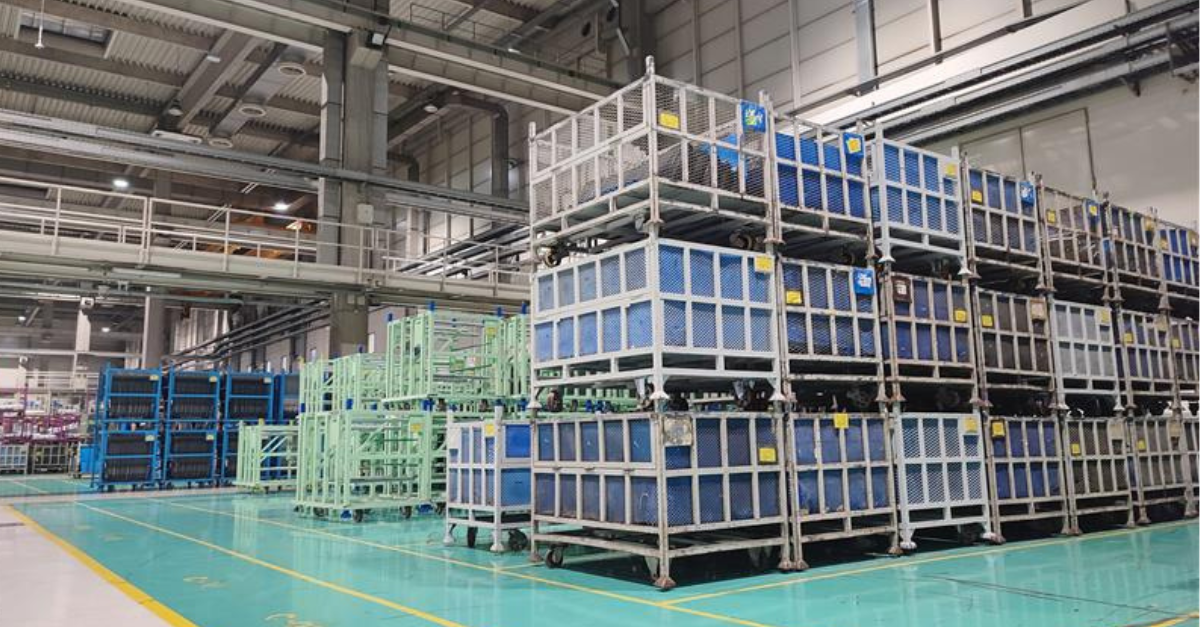
Image: Stillages lined up at a manufacturing facility
Why Equipment Gets Lost
The root cause of most equipment loss is simple: there is no reliable system to show where assets are at any given moment.
Most operations start out managing assets by hand. A spreadsheet records what was shipped, where it went, and when it is expected back. For a small fleet, this works fine. For tens of thousands of assets moving across multiple sites, carriers, and customer locations, it breaks down fast.
Spreadsheets do not update themselves. They rely on people logging every movement across every shift, every handover, and every site. In practice, this logging often fails. An asset leaves a facility and gets recorded. It arrives at a customer site and does not. It moves between locations with no one noting it down. It sits in a corner of a yard for six weeks because nobody knew it was there.
With a small number of assets, the gaps are manageable. With thousands, they grow into serious visibility problems. By the time someone notices how bad things have gotten, a large share of the asset pool has effectively gone missing.
This is not a people problem. It is a process and technology problem. No amount of care or effort can make manual tracking reliable when the numbers are too large for any team to manage by hand.
The Real Cost of Equipment Loss
When we talk to operations managers about equipment loss, they usually focus on two costs: buffer stock and penalty charges.
Buffer stock is the extra inventory bought to cover for assets that cannot be found. If you know some of your roll containers or pallets will often be missing, you buy extra to keep things running. It is a short-term fix that quietly becomes a high long-term cost.
Penalty charges apply when returnable packaging or leased equipment is not returned on time. Suppliers and leasing companies charge late return fees, and those fees build up quickly across many jobs at once.
Both of these costs are real and worth addressing. Beyond these, there are also hidden costs that rarely show up on any financial report.
The Hidden Cost of the Yard Hunt
When an asset cannot be found, someone has to go and find it. That might mean one person spending twenty minutes checking three spots. In a larger facility, it might mean several people spending hours going through a yard, a warehouse floor, or a network of sites. Add that up across a team, a working week, and a full year, and the cost in staff time is very high.
But the money is only part of the picture. There is a human cost that is harder to measure and just as important.
Asking skilled staff to spend their days walking yards looking for missing equipment is demoralising. It is not what they were hired to do. It is not what they want to do. Over time, it drains motivation and builds frustration. This creates a low-level tiredness that affects how well the whole operation runs.
This matters to us. Asset tracking is often talked about purely as a way to cut costs, and it is that. But it is also a way of giving people back their time and letting them focus on work that actually means something. Any operation that cares about its people should care about this too.
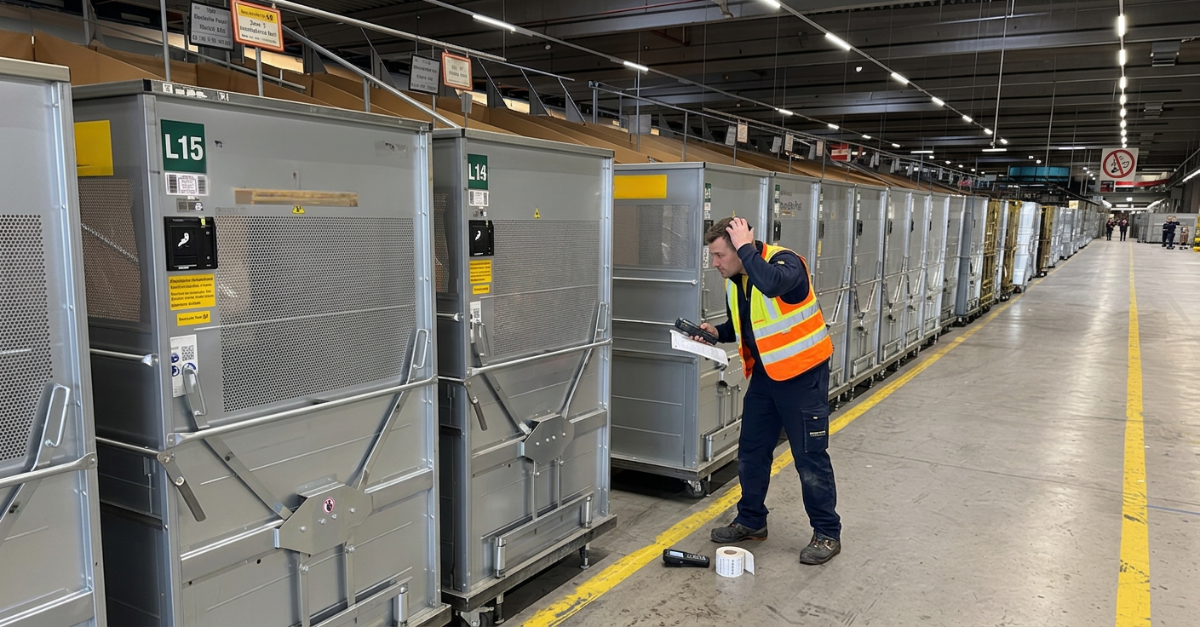
Image: Warehouse staff member manually searching for assets in a storage facility
How Equipment Loss Affects Your Operation
To get a full picture of what it means to not know where your assets are, look at what goes wrong when things go missing.
In manufacturing, missing tools or equipment does not just cause a delay. It stops production lines. Every hour a line sits idle waiting for something that should be there has a direct cost in lost output.
In logistics, missing roll containers or pallets mean late deliveries, broken promises, and damaged customer relationships. The asset is not just an asset. It is a link in a chain, and when it disappears, the whole chain is affected.
Without visibility, operations also tend to buy more than they need. Returnable packaging pools grow larger than the actual flow of goods would require. Money gets tied up in assets sitting idle in unknown locations rather than moving through the network as they should.
And without up-to-date location data, every decision about where to send assets is based on guesswork. Managers cannot plan ahead because they cannot see what is happening. They handle problems as they come up instead of preventing them, and that constant firefighting builds up over time.
How Asset Tracking Prevents Equipment Loss
IoT-based asset tracking replaces guesswork with facts. IoT, or the Internet of Things, refers to devices that connect to the internet and share data with each other automatically. In asset tracking, this means each piece of equipment carries a small device that reports its location in real time, without anyone needing to log it manually.
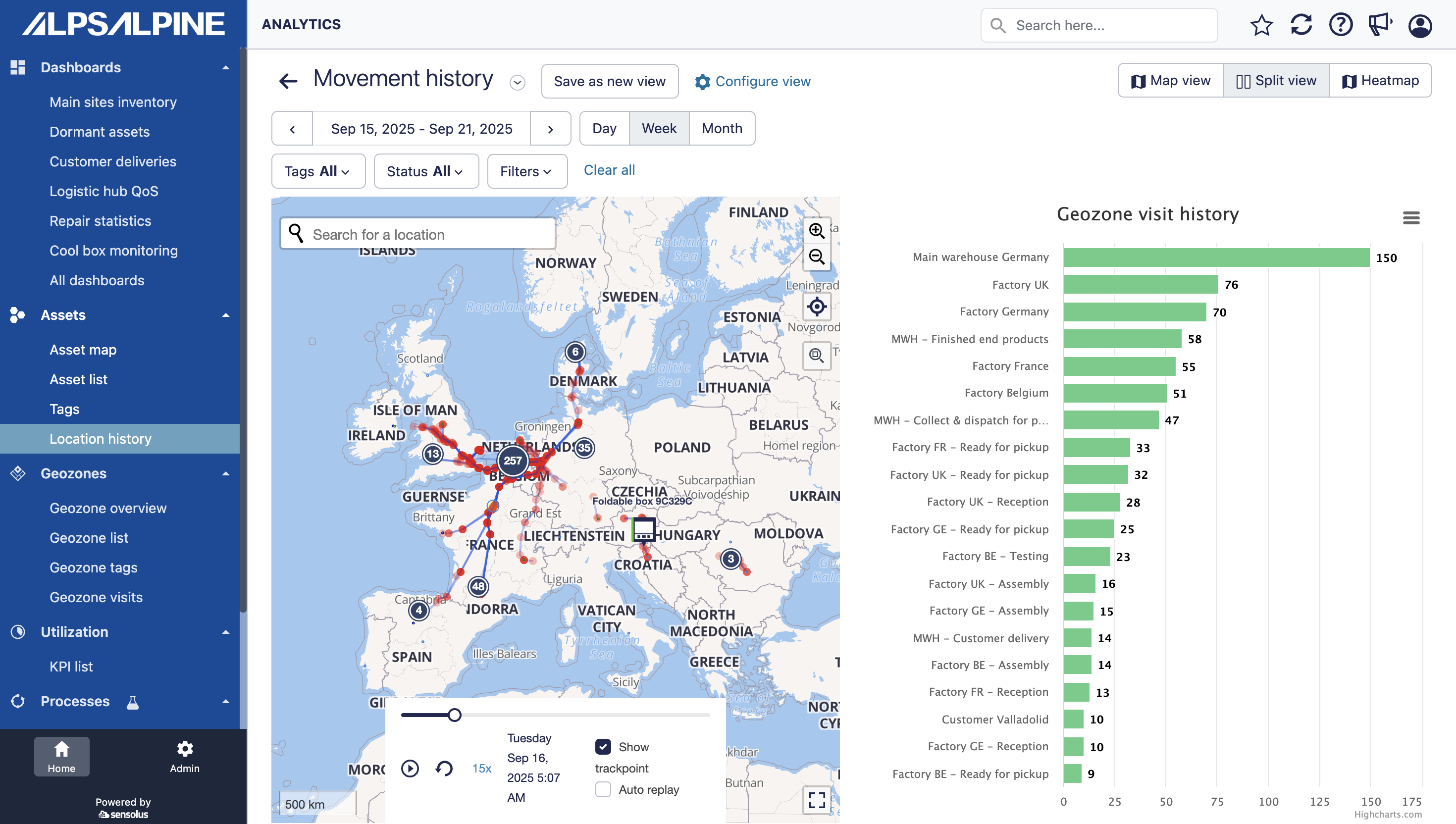
Instead of relying on spreadsheets and memory, every asset in the fleet reports its location on its own as part of a complete asset tracking solution. Operations teams can track every trailer, pallet, roll container, or piece of tooling at any time, see whether it is moving or still, and know how long it has been in one place.
Image: Near-real-time asset tracking dashboard showing equipment locations across countries
That single change, going from no visibility to full visibility, makes a real difference:
- Assets sitting idle for too long are flagged automatically, without anyone needing to go looking.
- Overdue returns can be followed up before a penalty charge is issued.
- Yard hunts are replaced by a quick dashboard check that takes seconds rather than hours.
- Buffer stock can be set at the right level based on real movement data, rather than rough estimates that assume some assets will always be missing.
Most importantly, the people doing the looking get to stop looking and start managing.
How DHL Solved a 450,000-Asset Equipment Loss Problem
The challenges above are not theoretical. They happen every day in some of the world's largest logistics operations, and the DHL case clearly shows what it takes to prevent equipment loss at scale.
In 2016, DHL had a visibility problem that showed exactly what happens when manual tracking reaches its limit. Their fleet of 450,000 roll containers moved through a vast network of parcel centres, and they could not reliably answer one simple question: where are our assets right now?
What they needed was demanding. The tracker had to hold up in tough industrial conditions over many years. It had to work at fleet scale without costing too much per unit. And it had to stay connected reliably, even in locations with patchy network coverage.
Alps Alpine Tracking ran a 1,000-unit test in 2017, followed by a 3,000-unit trial in 2018. The results were strong enough to support a full rollout. In 2019, DHL placed an order for 250,000 units across their Parcel Centre network. By 2020, the programme had grown to cover Letter Centre trolleys, adding another 400,000 units to the tracked fleet.
The DHL story highlights something often missed in conversations about equipment loss. The companies facing the biggest visibility problems are not always the ones with the worst processes. They are often the ones running at a scale where even solid manual processes simply cannot keep up. At a certain size, the issue is not effort or discipline. It is the basic reality that you cannot prevent equipment loss without the right technology in place.
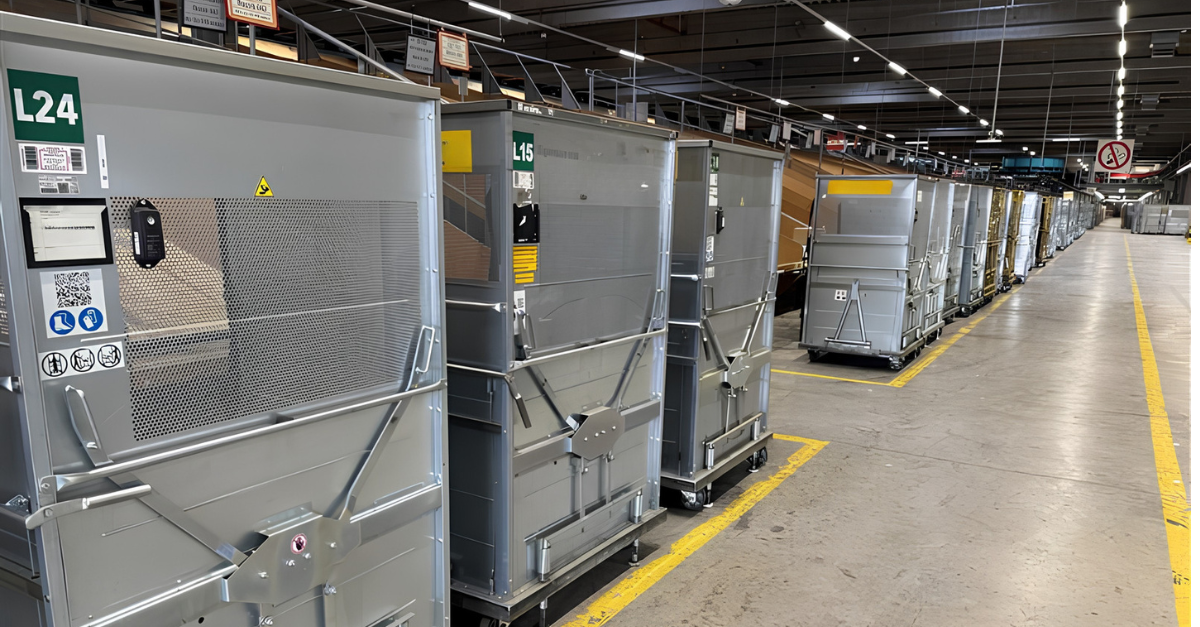
Image: Alps Alpine IoT tracker mounted on a DHL roll container
Practical Steps to Prevent Equipment Loss in Your Operation
If you are currently managing assets by hand, getting to a better place does not have to be complicated. Here is how we would approach it.
Audit Your Equipment Loss Risk
Before looking at any technology, get a clear picture of where things stand today. Work through these questions:
- How many assets do you have in total?
- What share of them can you locate at any given moment?
- How many staff hours per week go toward manual tracking and yard searches?
- How much buffer stock are you holding compared to what your actual asset flow would need?
- How many penalty charges did you receive in the last twelve months, and what did they cost?
These numbers give you a baseline and make the case for change feel real rather than abstract.
Identify Your Highest Equipment Loss Risk Assets
Not every asset carries the same risk or cost when it goes missing. Focus your initial effort on:
- High-value equipment where loss has the biggest financial impact
- Assets with long return cycles that are harder to track over time
- Items that pass through many hands and locations, where the chance of a logging gap is highest
Starting here gets results quickly and makes it easier to build the case for rolling the programme out further.
Clarify Where Your Assets Actually Operate
Asset tracking works across a range of connection types, and the right one depends on where your assets spend most of their time. Consider:
- Do your assets move across wide geographic areas, or do they stay within one facility or yard?
- Are there locations in your network with limited or patchy connectivity?
- What battery life does your operating environment require?
Understanding these factors helps you choose the right technology and avoid a mismatch between what the solution offers and what your operation actually needs.
Think About Integration From the Start
Asset location data becomes far more useful when it feeds into the tools your team already uses. When tracking data connects to your warehouse management system, ERP, or logistics platform, it becomes part of daily decisions rather than a separate report someone has to remember to check. Plan for this from the beginning rather than adding it later.
Set Clear Equipment Loss Reduction Goals
Decide what success looks like before the technology goes in. Set targets across at least a few of these areas:
- Reduction in the percentage of assets that cannot be located at any given time
- Decrease in buffer stock held across the network
- Fewer penalty charges for late returns
- Hours of staff time saved per week on manual tracking and searching
Having clear targets makes it possible to measure results, share them with your team, and keep building on them.
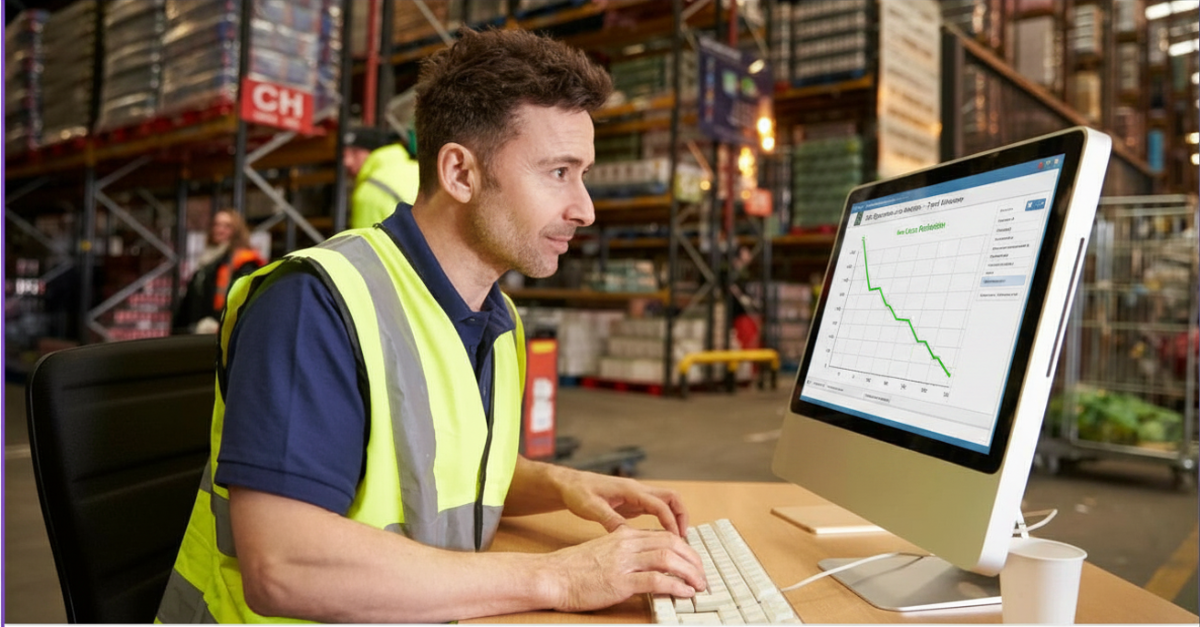
Image: Logistics manager seeing equipment loss reduction data
Start the Conversation Today
Operations managers often tell us they are not sure where to start, or that they want a clearer picture of the problem before talking to anyone about solutions. That is not how it works with us.
Equipment loss is a problem that grows quietly until it becomes very expensive to ignore. The longer manual tracking stays in place, the more assets go missing, the more staff time gets wasted, and the harder it becomes to get a clean picture of what you actually have. Getting ahead of it is always easier than catching up.
The good news is that you do not need a perfect plan to start. Most of the operations we work with began the conversation with nothing more than a rough sense of the problem and a few questions. That is enough.
If you manage assets at scale and something in this post struck a chord, we are happy to talk it through. It does not have to be a formal inquiry. General questions are just as welcome.
Reach out to the Alps Alpine Tracking team and let us know what you are working with. We will take it from there.
Contact us!
Got questions? Book a demo and get the answers you need.
Discover how ALPS ALPINE asset trackers can support your operations, with no pressure or obligation to purchase.
Fill out the form below to connect with our team.