

Choosing the Right Technology for Asset Tracking
What You Need to Know
Introduction

Selecting the right technology for your physical asset tracker is an essential decision as it impacts the performance, reliability, and overall cost of your entire tracking system. However, with an ever-expanding array of communication and geolocation options, choosing the right technology best for your use case is a tough nut to crack. Therefore, understanding your needs is a critical first step toward success.
This series will walk you through the primary communication and geolocation technologies, helping you find the right mix for your unique needs. Each post will highlight different use cases, with their respective pros and cons, and provide decision-making tips to help you find the best solution.
Why It Matters
Let's start with why you need the "right" technology for your asset tracking. Selecting the wrong communication or geolocation technology can lead to higher operating costs, limited asset visibility, or even asset loss. A mismatched system may be a cause of insufficiency, such as poor signal coverage, reduced battery life, or being unable to operate in specific environments. BLE Asset tracking tags, for instance, require nearby Bluetooth access points to function. Without consistent infrastructure, tracking can be lost when assets move out of range. To maximize your investment in your physical asset tracking and management system, you need to select the right technology that best suits your use cases.
Communication vs. Geolocation:
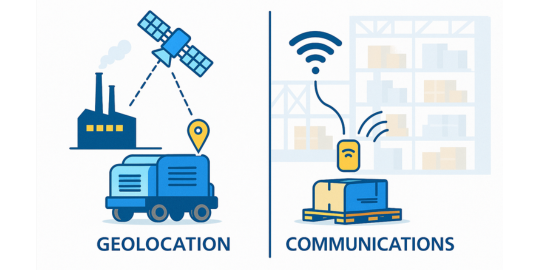
When evaluating asset tracking technologies, one of the most important distinctions to understand is the difference between communication and geolocation technologies. While they often work hand-in-hand in asset tracking systems, communication and geolocation technologies actually play very different roles.
1. Communication Technology: How Data Leaves the Device
This refers to how the tracker transmits its data, typically including the asset's location and possibly additional information (such as temperature and motion), to a centralized platform, where it can be monitored and analyzed.
Common communication technologies include:
- Cellular (2G/3G/4G/5G): Great for coverage and bandwidth, but energy consuming.
- LPWAN (LoRa, Sigfox, NB-IoT): Designed for low-power, long-range communication, ideal for battery-powered devices.
- Satellite: Used when terrestrial networks aren't available, like offshore, in deserts, or remote mountain regions.
- Wi-Fi/Bluetooth: Used in short-range scenarios or to offload data when the tracker comes into proximity to an access point.
The communication method has an impact on the following:
- How often the device can report
- Battery life
- Coverage reliability
- Monthly costs (e.g., SIM or satellite subscription)
2. Geolocation Technology: How the Device Finds Itself
This is how the device determines its location before sending that information out.
Popular geolocation technologies include:
- GPS (Global Positioning System): Satellite-based and highly accurate outdoors, but power-intensive.
- Wi-Fi Positioning: Utilizes the MAC addresses of surrounding Wi-Fi routers to triangulate location, even indoors.
- Bluetooth (BLE Beacons): Useful for indoor proximity detection or room-level zoning.
- Cell-ID or Network Triangulation: Rough location estimation based on cell towers or LPWAN signal strength. Less accurate but low-power.
Geolocation capabilities define:
- How accurate the position data is
- Whether indoor tracking is possible
- Power usage required for each fix
Think of communication as the messenger and geolocation as the location scout. You need both working in sync for an efficient system.
Real-Time Isn’t Always the Right Time
When people hear "asset tracking," many instinctively imagine real-time updates every second, like watching a GPS dot move across a map. While this might sound ideal, real-time tracking is often not the smartest (or most efficient) approach.
In fact, constantly streaming location data can drain batteries, overload networks, and inflate data costs without delivering meaningful operational value, especially in industrial or logistics settings.
Instead of aiming for the fastest updates possible, the goal should be to track assets at the right time, based on the needs of your operation. This is where "right-time tracking" comes in.
In many industrial and supply chain scenarios, constant location updates are unnecessary. What really matters is receiving the right data at the right moment, when it supports a business decision, triggers an action, or confirms asset status.
For example:
- A fleet manager may only need to know when a trailer enters or leaves a site.
- A shipping company might require updates only every 10–15 minutes or when an asset crosses into a new region.
This “right-time” approach is more than just efficient, it’s strategic:
✅ Reduces power consumption, significantly extending battery life
✅ Minimizes connectivity and data costs
✅ Lowers maintenance and replacement cycles, meaning fewer service disruptions and truck rolls
And here’s the business payoff:
Longer battery life directly improves return on investment (ROI). When a tracker lasts longer in the field without needing to be replaced, it delivers more value and reduces your total cost of ownership.
Ultimately, the goal isn't to track your assets every second, but it's to reduce the cost, effort, and risk of managing them, while maintaining visibility and security.
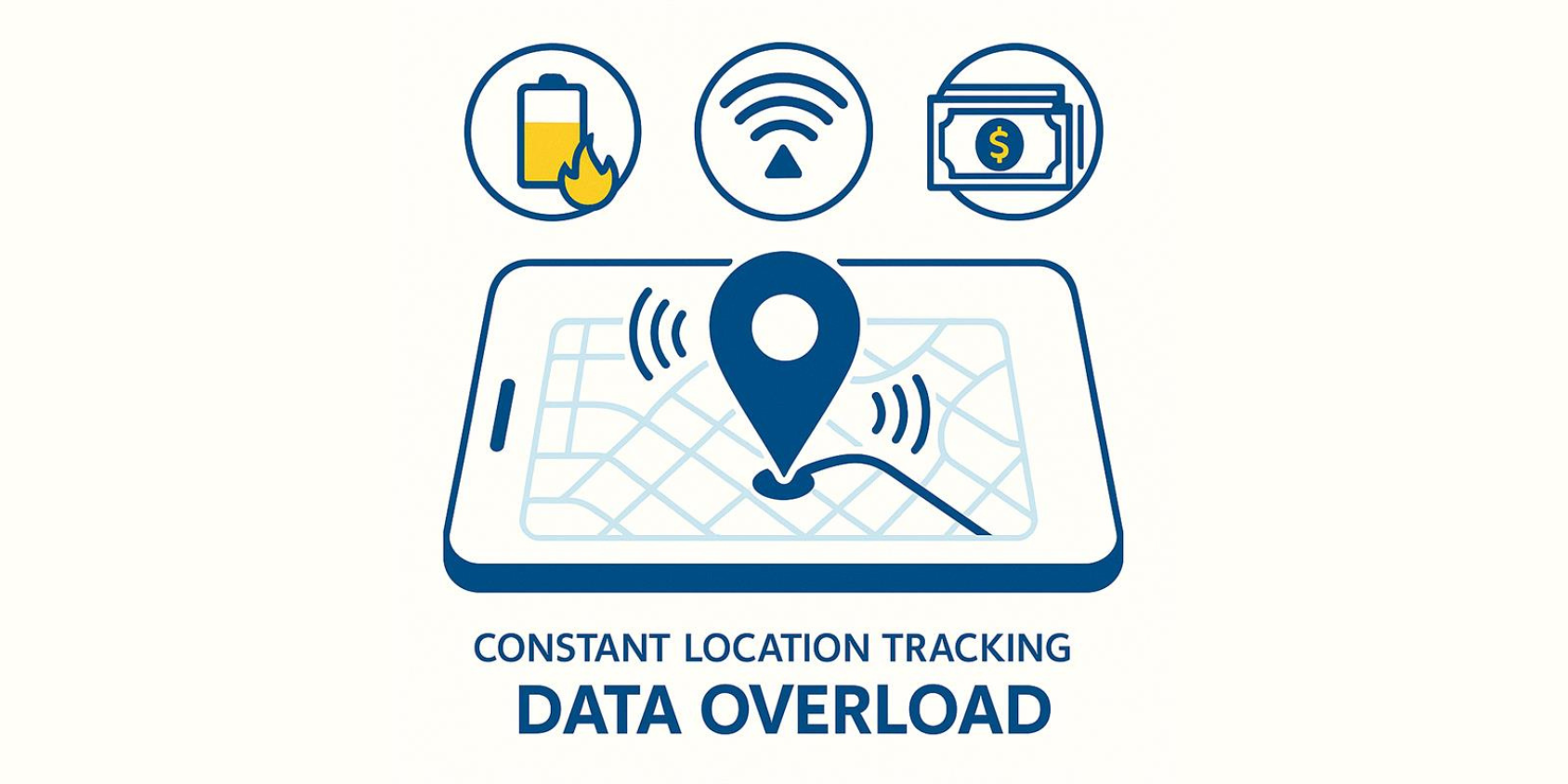
When people hear the word "asset tracking," many of you might instinctively imagine "real-time" asset tracking, which updates the data every second, like watching a GPS dot move across a map. While this might sound ideal, real-time tracking is often not the smartest (or most efficient) approach.
In fact, constantly streaming location data can drain batteries, overload networks, and inflate data costs without delivering meaningful operational value, especially in industrial or logistics settings.
Instead of aiming for the fastest updates possible, the goal should be to track assets at the right time, based on the needs of your operation. This is where "right-time tracking" plays an important role.
In many industrial and supply chain scenarios, constant location updates are unnecessary. What really matters is receiving the right data at the right moment when it supports a business decision, triggers an action, or confirms asset status. Take fleet management, for example. Most of the time, it's not necessary to track a trailer's exact location every second. What really matters is knowing when it arrives at a customer site or leaves a depot. In logistics, regular updates every 30 minutes or when an asset enters or exits a region are often all that's needed to keep things running smoothly. In this case, "real-time" asset tracking is excessive and drains the tracker's battery energy, leading to inefficiency and increased costs in physical asset management.
Contrastingly, "right-time" asset tracking proves its value by providing the information that matters most right when you need it, rather than flooding your system with constant updates. Devices get longer battery life, network costs stay low, and fewer replacements mean fewer service interruptions. The result is a more reliable and cost-effective tracking system that works for your operation, not against it. Longer battery life directly improves return on investment (ROI) as it delivers more value and reduces your total cost of ownership.
Ultimately, the goal isn't to track your assets every second but to reduce the cost, effort, and risk of managing hundreds and thousands of your physical assets while maintaining visibility and security.
Conclusion
Matching Technology to Your Use Cases
Matching Technology to Your Use Case
Choosing the right technology starts with one important step: understanding your unique situation.
Ask yourself:
- Are your assets stationary, mobile, or a bit of both?
- Do they stay within your premises, city limits, or move across countries?
- How often do you truly need location updates?
These questions shape the ideal tech stack for your needs. By aligning your technology choices to your operations, you'll create a system that is reliable, scalable, and cost-effective in the long run.
But here’s the thing: doing this alone can be overwhelming. The options are complex, the terminology can be confusing, and the research takes time you may not have.
That’s where we come in.
At Alps Alpine, we’ve helped countless businesses around the world solve these exact challenges. Whether you’re just getting started or refining an existing system, we’re here to listen, support, and help you find the solution that works for your goals, your assets, and your budget.
Let’s make asset tracking simple, effective, and tailored to you.
Reference
- News – Page 2 – L1 Axle – Trailer axle for semi-trailer, Customized solution provider for running gear systems. https://www.ltcmc.com/category/news/page/2/
- Supply Chain Traceability: A Complete Guide. https://www.propelapps.com/blog/supply-chain-traceability
Up Next
In our next post, we’ll dive into the key communication technologies that power asset trackers today and help you understand the trade-offs between options like cellular, LPWAN, and more.
Stay tuned. We’re just getting started.
Kontaktieren Sie uns!
Fragen? Buchen Sie eine Demo und erhalten Sie alle Antworten, die Sie benötigen.
Entdecken Sie, wie die Asset-Tracker von ALPS ALPINE Ihre Abläufe unterstützen können – ganz ohne Verpflichtung oder Kaufdruck.
Füllen Sie das untenstehende Formular aus, um mit unserem Team in Kontakt zu treten.